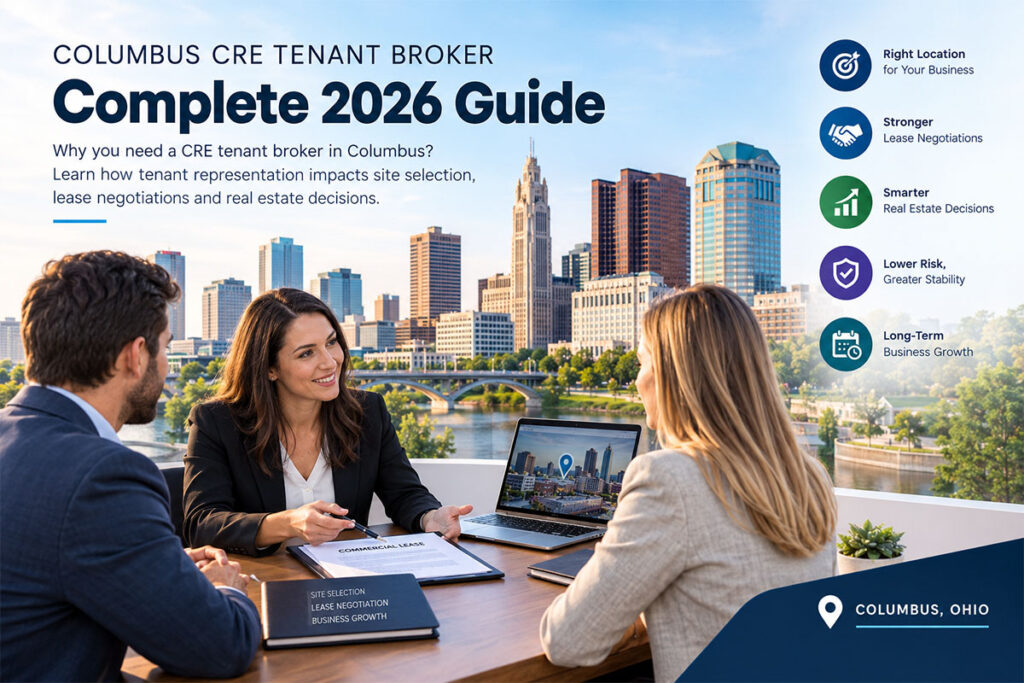
Tenant Rep Broker Cleveland – Save More Money
You walk into a lease meeting thinking you’re prepared. The numbers look clean. The space feels right. The landlord sounds reasonable. But here’s the truth most tenants don’t see until it’s too late—you’re negotiating on a battlefield where the other side has more data, more experience, and more leverage.
That’s exactly why working with a tenant rep broker in Cleveland, Ohio is protection. If you’re expanding, relocating, or signing your first commercial lease in Cleveland or Columbus, the difference between doing it alone and doing it right can cost (or save) you thousands.
Why Tenants Overpay Without Representation
Most tenants don’t lose money because they’re careless. They lose because they don’t know what they don’t know.
A lease isn’t just rent. It’s layers of hidden terms, escalations, and conditions that quietly stack against you. Landlords negotiate leases every day. You don’t.
So, what happens?
You agree to terms that look fair on the surface. Months later, unexpected costs start creeping in. Your flexibility disappears. Your leverage is gone.
This is where most businesses feel that slow, sinking regret. Not because they made a reckless decision—but because they made an uninformed one.
What a Tenant Rep Broker Actually Does
A tenant rep broker isn’t just there to “find space.” That’s the smallest part of the job. The real value is in strategy, protection, and control.
1. Lease Negotiation Strategy
Every clause in a lease can be negotiated. Rent is just the beginning. A strong tenant rep broker pushes for better terms, reduced risk, and flexibility that protects you long-term.
2. Market Rent Analysis
Without real market data, you’re guessing. A tenant rep broker knows what others are paying in similar spaces across Cleveland and Columbus—and uses that to your advantage.
3. Site Selection Support
A space might look perfect, but if the location doesn’t support your business model, it becomes a liability. Tenant representation ensures your decision is based on performance, not appearance.
4. Risk Reduction
From hidden fees to restrictive clauses, your broker acts like a filter—removing bad deals before they reach your desk.
Cleveland vs Columbus – Market Differences That Matter
Cleveland and Columbus may both be in Ohio, but they operate differently when it comes to commercial leasing.
Cleveland offers established retail corridors with stable but competitive pricing. Columbus, on the other hand, is growing faster, with more aggressive development and shifting demand.
If you treat both markets the same, you lose leverage.
A tenant rep broker helps you adjust your strategy based on:
- Local demand trends
- Vacancy rates
- Landlord flexibility
- Retail vs office dynamics
This is positioning (not guesswork).
Hidden Lease Costs You’re Probably Missing
This is where most tenants quietly lose money.
Commercial leases are built to look simple—but they’re not.
Common hidden costs include:
- CAM (Common Area Maintenance) charges that fluctuate
- Rent escalations that increase your cost every year
- Build-out expenses you didn’t fully account for
- Exit clauses that limit your ability to pivot
These costs don’t show up as red flags. They show up as “fine print.” And once you sign, they’re locked in.
A tenant rep broker sees these traps before they become your problem.
Tenant Rep Broker vs Landlord Broker
This is where confusion kills deals.
A landlord broker works for the landlord. Their job is to maximize the landlord’s return.
A tenant rep broker works for you. Their job is to minimize your risk and cost.
Simple difference. Massive impact.
Without representation, you’re negotiating directly with someone whose incentives are the opposite of yours. That imbalance alone is enough to cost you more than you realize.
What Happens If You Don’t Hire One
Let’s make this real.
You find a space that feels right. You move fast because you don’t want to lose it. The landlord presents a lease. It seems standard.
You sign.
Three months later:
- You discover fees you didn’t fully understand
- Your rent increases faster than expected
- A better location opens up—but you’re locked in
- Your margins tighten
Nothing went “wrong.” But everything could have been better.
That’s the cost of doing it alone.
How Anchor Retail Protects Tenants
Anchor Retail operates differently from large firms like CBRE or Cushman & Wakefield.
Where those firms often operate at scale, Anchor Retail focuses on precision and tenant-side advocacy, especially in retail environments.
Instead of pushing listings, the focus is on:
- Understanding your business model
- Identifying locations that perform
- Negotiating terms that protect your long-term growth
It’s not about closing deals. It’s about closing the “right” deal.
How to Choose the Right Tenant Rep Broker
Not all brokers are equal. Choosing the wrong one is just another version of going in unprepared.
Look for:
- Exclusive tenant representation (no landlord conflicts)
- Local market knowledge in Cleveland and Columbus
- Clear negotiation strategy, not vague promises
- Retail-specific experience if you’re in that space
If a broker can’t explain exactly how they’ll save you money or reduce risk, they’re not the right fit.
FAQs
1. What is a tenant rep broker?
A tenant rep broker is a commercial real estate professional who represents tenants in lease negotiations, site selection, and market analysis—ensuring better terms and reduced risk.
2. Do tenant brokers cost money?
In most cases, tenant brokers are compensated through commissions built into the lease by landlords. That means you typically get representation without direct out-of-pocket costs.
3. Is it better to use a tenant rep broker?
Yes. Without one, you’re negotiating at a disadvantage. With one, you gain leverage, insight, and protection.
4. How do tenant brokers get paid?
They are usually paid by the landlord as part of the leasing agreement, but their duty is to represent your interests—not the landlord’s.
5. Can I negotiate a lease myself?
You can—but it’s like walking into a negotiation without knowing the rules. You may get a deal, but rarely the best one.
Final Thought
A commercial lease isn’t paperwork. It’s a long-term commitment that shapes your business.
The wrong terms can quietly drain your profits. The right terms can give you room to grow, adapt, and succeed.
Working with a tenant rep broker in Cleveland, Ohio isn’t about adding another step. It’s about removing risk, gaining clarity, and making sure you don’t look back with regret.
Because once you sign, everything becomes harder to fix.
And by then, the deal is already done.