A case study in persistence, communication, and closing complex commercial real estate transactions against the odds.
When most commercial real estate deals hit a wall — rising interest rates, permitting delays, contentious lease negotiations — they fall apart. This one didn’t.
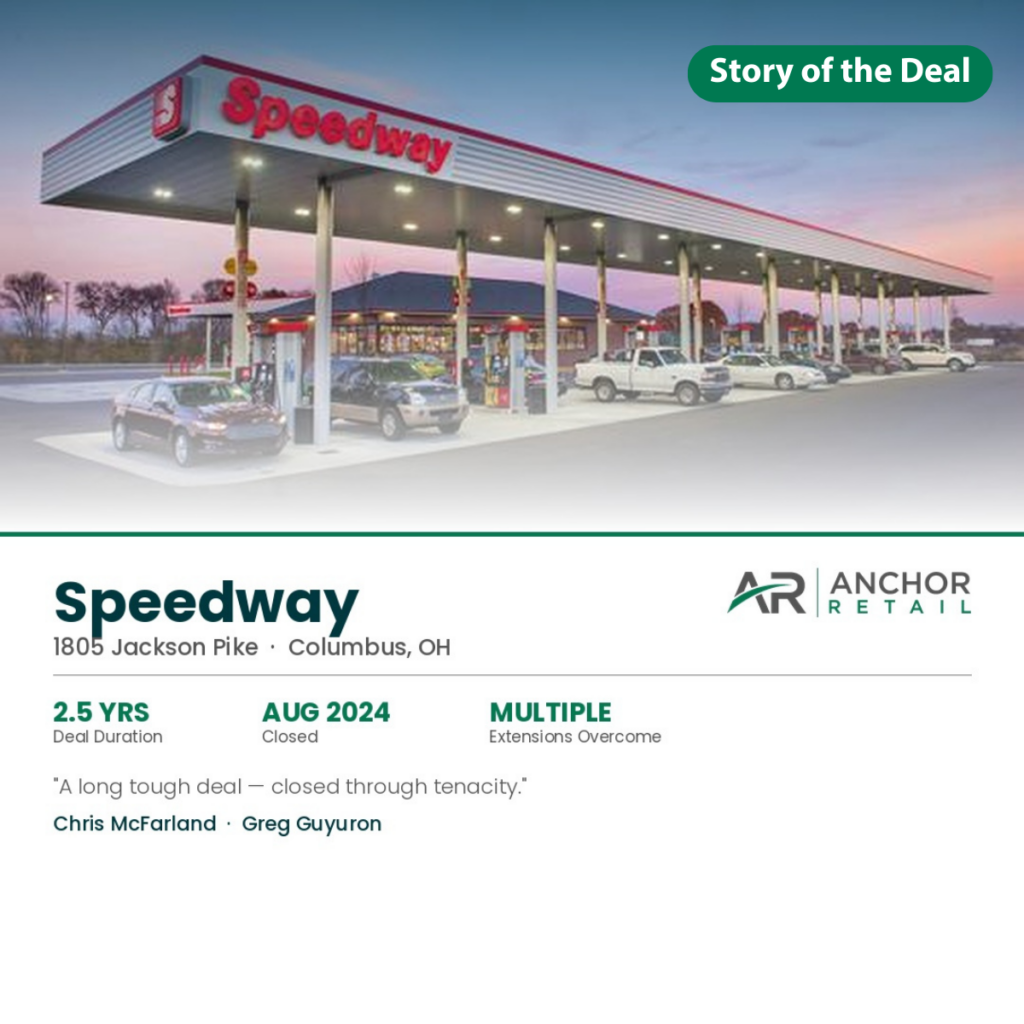
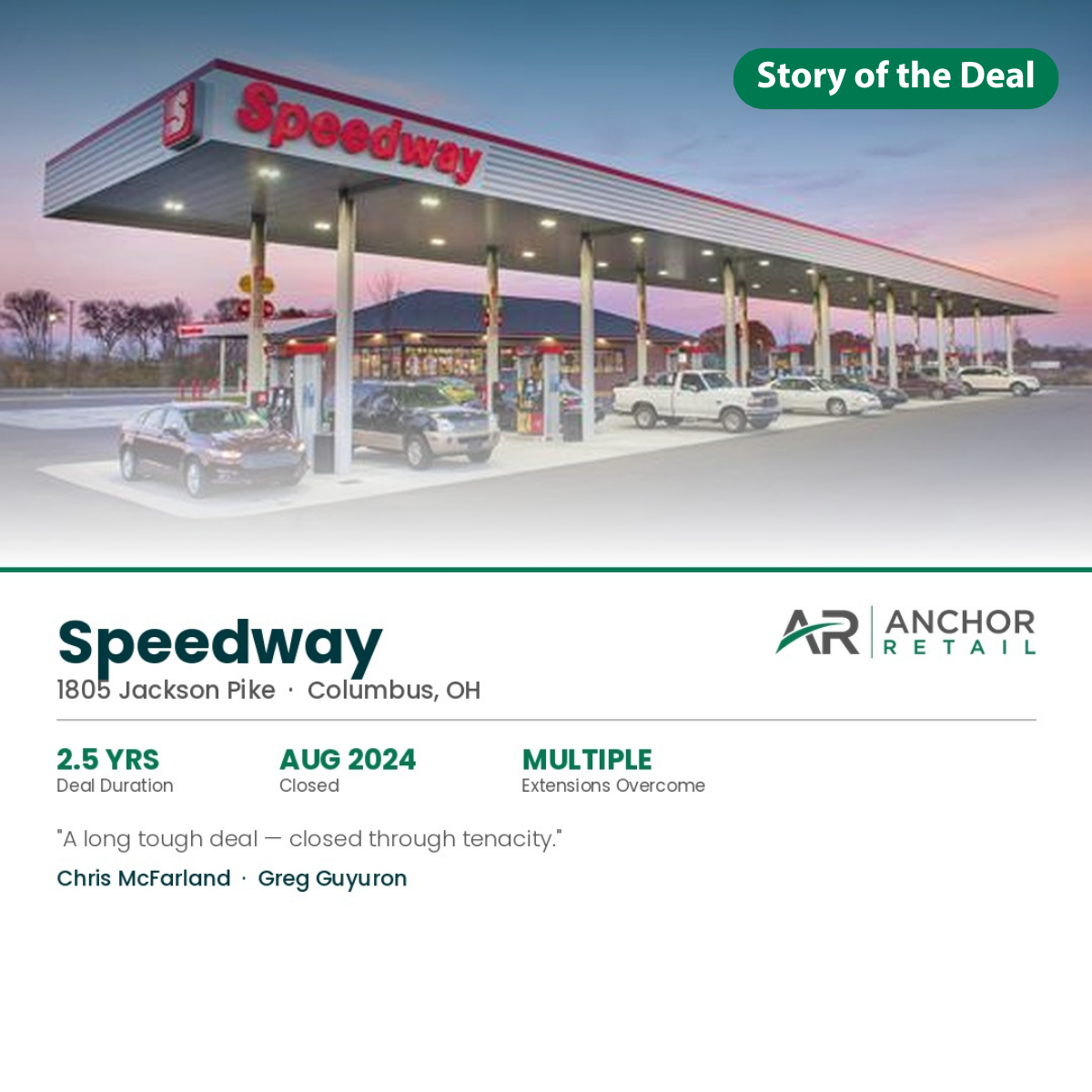
The development of a Speedway / 7-Eleven gas station at 1805 Jackson Pike, Columbus, OH 43223 stands as a textbook example of what it takes to close a high-stakes commercial deal in a turbulent market. From inception to closing, the project spanned over two and a half years and tested every tool in a real estate professional’s toolkit.
Here’s how it got done.
Project Overview: Speedway / 7-Eleven, Columbus, Ohio
|
Detail
|
Info
|
|---|---|
|
Property Address
|
1805 Jackson Pike, Columbus, OH 43223
|
|
Project Type
|
Gas station / convenience store development
|
|
Tenant
|
Speedway / 7-Eleven
|
|
Project Inception
|
January 25, 2023
|
|
Initial Expected Closing
|
April 30, 2024
|
|
Final Closing Date
|
August 23, 2024
|
What was expected to close in roughly 15 months ultimately took nearly 31. And yet — it closed.
The 3 Biggest Obstacles in This Commercial Real Estate Transaction
1. A Volatile Lending Market and Rising Construction Costs
This deal launched in early 2023, right as the commercial lending environment turned hostile. Interest rates were climbing, lenders were tightening underwriting standards, and construction costs remained stubbornly elevated from post-pandemic supply chain disruptions.
Financing a ground-up gas station development in this environment was, in the words of those involved, “tough to finance.” Many deals in similar conditions simply died in the due diligence phase. This one required creative problem-solving and ongoing lender communication to keep the capital stack intact.
Takeaway for investors and developers: Macroeconomic headwinds don’t have to kill a deal — but they require proactive lender relationships and flexibility on deal structure.
2. Entitlement Delays and Permitting Roadblocks
Local entitlements and permit approvals are among the most common — and most unpredictable — causes of closing delays in commercial real estate development. This project was no exception.
Waiting on final permits pushed the closing date back multiple times, requiring the team to file extension after extension while keeping all parties aligned and motivated to stay in the deal.
For developers eyeing similar gas station or net lease retail projects, this case underscores the importance of building permitting timelines into your proforma with significant buffer — and maintaining strong relationships with local municipalities throughout the process.
Takeaway for developers: Entitlement risk is real. Budget time conservatively and communicate proactively with all stakeholders during delays.
3. Complex Lease Negotiations Between Developer and Speedway
Even with financing and permits in motion, the deal required both the developer and Speedway to make concessions before the transaction could move forward. Lease terms, rent escalations, build-out responsibilities, and other deal points required back-and-forth negotiation that extended the timeline further.
This is a common dynamic in net lease development: national tenants like Speedway / 7-Eleven have institutional-grade lease requirements, and developers must balance those demands with their own return thresholds and lender requirements.
Takeaway for brokers and developers: In tenant-driven net lease deals, expect negotiation on both sides. Know your walk-away points — but also know where you can flex to keep the deal alive.
Why This Deal Matters: Lessons for Commercial Real Estate Professionals
This transaction was described by those involved as a “long tough deal” and a “very complicated project” — and that’s not hyperbole. But it closed.
The key factors that made the difference:
- Persistent communication between all parties throughout a multi-year timeline
- Willingness to extend rather than walk away when obstacles arose
- Mutual concessions that allowed both the developer and tenant to get to yes
- Coordination across disciplines — financing, entitlements, permitting, and leasing all had to come together simultaneously
For commercial real estate investors, brokers, and developers working on net lease, gas station, or convenience store projects, this case study is a reminder that deal complexity is not a reason to quit — it’s a reason to stay organized, stay communicative, and stay patient.
Interested in Net Lease Gas Station Investments?
Gas station and convenience store assets — particularly those anchored by national brands like Speedway and 7-Eleven — remain attractive to net lease investors for their long-term leases, corporate-backed rent, and essential-use positioning.
If you’re exploring similar commercial real estate opportunities in Columbus, Ohio or surrounding markets, this deal proves that even the most complicated transactions can reach the finish line with the right team and the right persistence.