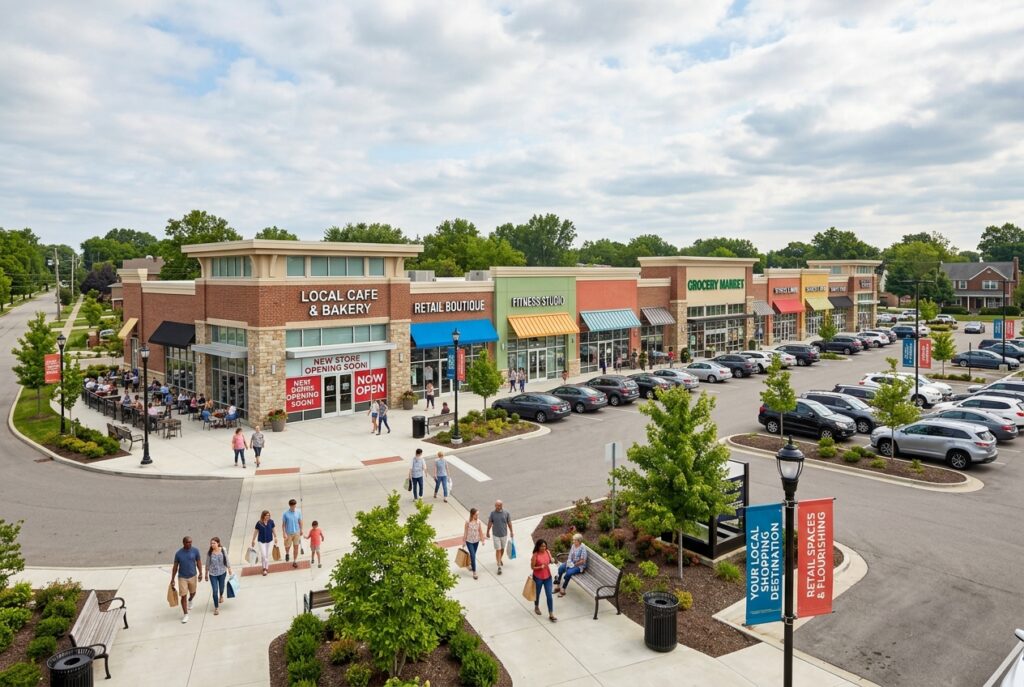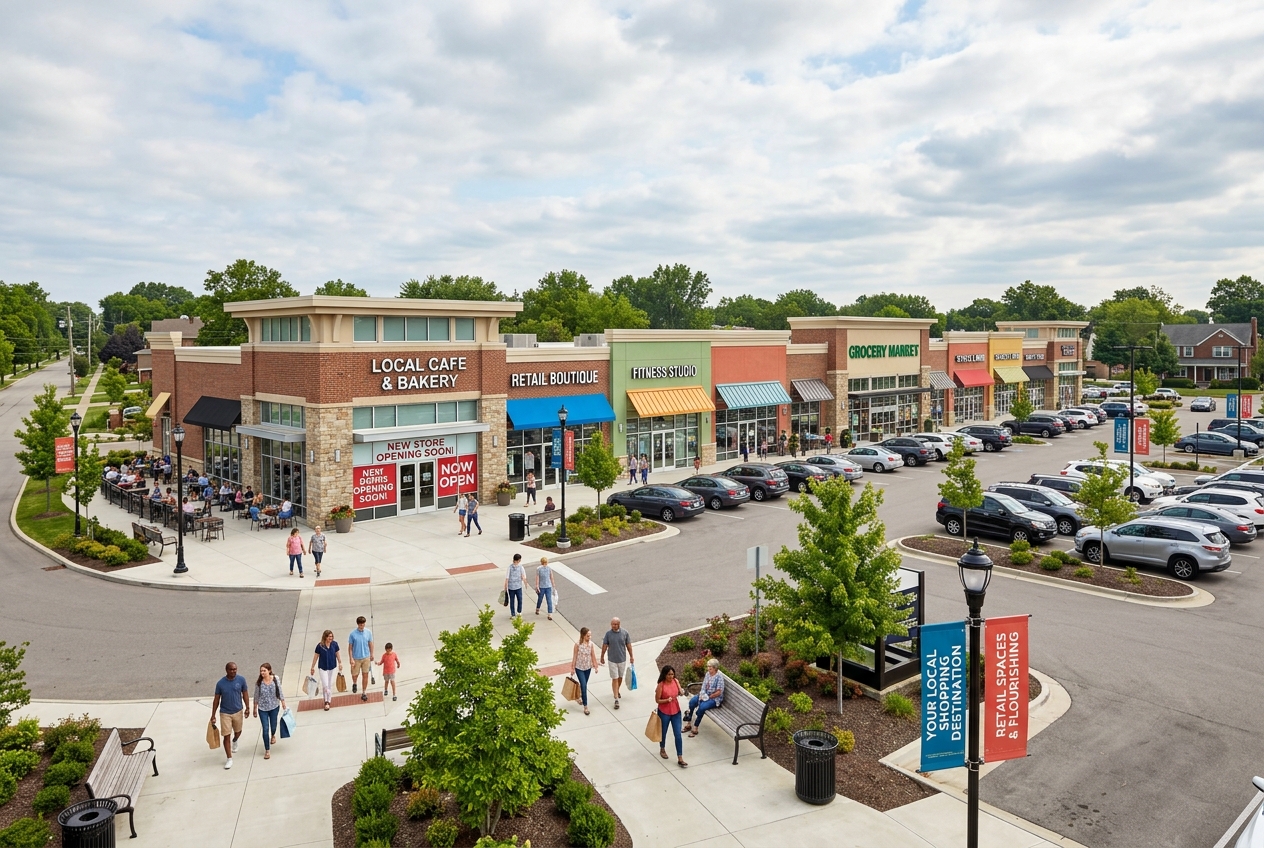
Your gaze falls upon the same dark store you’ve been seeing there for months now. The sign is still up. The rent isn’t coming in, yet the expenses for maintaining the property continue to mount.
Making the vacancy at a shopping center less obvious goes beyond placing a “For Lease” sign inside. A vacancy becomes harder to deal with as soon as the owner acts without understanding the market signals first. You need the right tenant, the right conditions, and the right motivation for shopping center leasing in Ohio.
What Makes a Shopping Center Vacant?
A vacancy is typically caused by more than one factor. There’s a possibility of the rent being too high. The vacant premises may not appeal to the retailers you’re trying to attract. There may be an ineffective tenant mix at your site. Or you could also be targeting wrong potential tenants.
“Effective branding attracts consumers and ensures a constant flow of foot traffic,” explains ICSC.
It means your aim shouldn’t always be to occupy an available unit with a tenant. Instead, finding the right tenant is the real deal.
7 Tips for Decreasing Shopping Center Vacancy
1. Start by Looking at Your Trade Area
Carefully analyze the residents, workers, shoppers, travelers and demographics in the surrounding area of your shopping center. Look at all traffic patterns, competing stores, and customer demand.
Retailers don’t require four walls; they require a location capable of drawing in customers. Market research will help to identify which businesses have a realistic chance of seeing the benefits of your site.
2. Examine Your Tenant Mix
Look at the business tenants in the shopping center. Do they complement each other? Is there an unrepresented retail or service that would fill a need among the customers?
The tenant mix of a shopping center can greatly improve its value.
3. Price Space to the Market
If your space has been empty for several months, then take another look at the rental rate and terms of the lease.
Lowering the price isn’t always the solution. The issue becomes how your entire offer stacks up in comparison with other locations.
4. Market to Appropriate Retailers
Sitting around waiting for a retailer to stumble upon your listing will not be as efficient as you may want.
Develop a list of appropriate retailers based on the property’s trade area and tenant mix. Then approach those retailers who have matching concepts, space needs, and expansion strategies.
At Anchor Retail, we explain our strategy as “market analysis, property analysis, targeted marketing and tenant qualification”.
5. Make It Easy for Retailer to Qualify
Retailers need information before even considering a visit.
Show the space size, availability date, terms, parking, accessibility, visibility, neighboring tenants, traffic, demographics and pictures. Give it an easy way to qualify the property before making a phone call.
6. Solve Issues Scaring Off the Retailer
Sometimes the vacant unit isn’t everything.
Signage issues, dilapidated common areas, limited access, poor lighting, deferred maintenance or inconvenient layout can hinder the success in leasing an excellent location.
Inspect the property like a new retailer would. What will be your first reaction?
7. Utilize Experience in Local Shopping Center Leasing
Experience from a local shopping center brokerage is comprised of market intelligence, retail relationships, prospecting, negotiation abilities, and transactional expertise.
Anchor Retail operates from Cleveland and Columbus. One satisfied client says Tori Nook has “great market knowledge in Ohio.”
Our landlord services consist of market research, area rents, retailer vacancies, property research, target marketing, qualifying tenants and buyers, and lease negotiation.
Ohio’s Marketplace Conditions Do Count
Neither Cleveland nor Columbus are interchangeable in terms of a retail marketplace.
According to Colliers, in Columbus, retail vacancy dropped below 3% in Q2 2026 while investment sales were at $88.3 million and active leasing occurred within several types of retail real estate.
There are properties whose performance will not be good even if their space, pricing, tenant mix, or location don’t meet demand.
In the same way, a strategy for your center should be developed based on your trade area and competitive set.
FAQs
1. Should you lease or sell a shopping center?
Leasing isn’t always the only option.
If your property has a good location and tenant demand, vacancy reduction can generate more revenue and increase value of the property. However, if the property is suffering from long-term vacancy, requires capital, and there’s no obvious path to leasing, selling can be another alternative.
Our investment services encompass market conditions analysis, financial analysis, disposition planning, and sale-leaseback.
2. What is the fastest way to reduce shopping center vacancy?
The starting point should be determining why it is vacant in the first place. Then, analyze rent, tenant mix, physical attributes of the center, targeted retailers and competing shopping centers. The key to success is addressing the primary obstacle, rather than simply reducing the asking rent.
3. Why do shopping centers have vacant retail spaces?
The reasons could include insufficient demand, poor positioning, unsuitable leasing terms, poor tenant mix, competition, among others.
4. How do you attract tenants to shopping centers?
Through researching the market and targeting potential suitable retailers, reaching out and negotiating mutually acceptable terms.
5. What makes a shopping center attractive for retailers?
Customer demographic, visibility, accessibility, parking, traffic, neighbors, cost of doing business and concept feasibility in the trade area.
Which Is Right for Your Shopping Center – Leasing It or Selling It?
Analyze what rental income you expect to receive, how large a vacancy rate, expenses, capital, demand, asset value, and personal objectives. Each solution addresses a different challenge.
You can use the empty shop space as a chance to generate income in your building. Start with the reason why your shop is empty and create a leasing program based on the market, selecting retailers that fit your shopping center.
Shopping center leasing in Cleveland and Columbus requires particular knowledge about the market. Correct data, tenant selection, contacts, and negotiations may help.
And if you need a reliable expert on your side feel free to call us today.